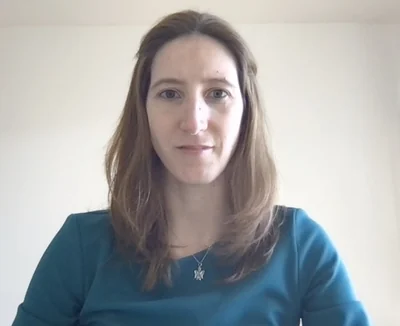
Jessica Perego, PhD
Founder & CEO
Jessica leads the scientific and product vision, bringing expertise in neuroimmunology, the microbiome and the gut–brain axis to research on neurological conditions.
LinkedIn ↗OUR STORY & SCIENCE
NeuraBI began with a question: could a better understanding of the gut microbiome help us look at neurological care differently?
In development · Recruitment openWe bring together microbiome science, business development and artificial intelligence. Our work is at an early stage, and we investigate carefully before we claim anything.
Founder & CEO
Jessica leads the scientific and product vision, bringing expertise in neuroimmunology, the microbiome and the gut–brain axis to research on neurological conditions.
LinkedIn ↗Co-CEO & Directrice Générale
Aurélia leads company development and operations, strategic partnerships and execution, connecting the scientific vision with the organisation needed to deliver it.

Co-founder & AI/ML Lead
Bhoumik leads AI and machine learning, computational modelling, data integration and technical development across the platform and its portals.
LinkedIn ↗OUR JOURNEY
Four milestones, from the prototype that exists today to a service that would follow validation. Timing depends on research findings, partnerships and the necessary approvals.
The analysis workflow, patient portal and clinician review have been implemented and tested with synthetic examples. This is software testing, not clinical validation.
Agreeing the study protocol, laboratory arrangements and clinical input, and preparing for the required approvals.
Run the pilot once approved, with follow-up and repeat samples, to find out whether this is feasible and useful.
Further validation and any regulatory steps would come before a service could become available.
The MS example uses 460 development household controls from the public iMSMS cohort. MS cases and the locked internal test set were not used to fit these reference intervals.
The public example compares 54 measurements: 47 bacterial species and 7 gene pathways. Pathways describe functional potential, not measured metabolite concentrations.
The model estimates the 10th–90th percentiles, accounting for age, recorded sex and BMI. This central 80% interval is a study comparison, not a clinically established healthy target.
The portal demonstrates the software workflow. Independent validation, processing compatibility and prospective clinical usefulness still require evaluation.
imsms-module1-expanded-reporting-reference-v1
THE SCIENCE, SIMPLY
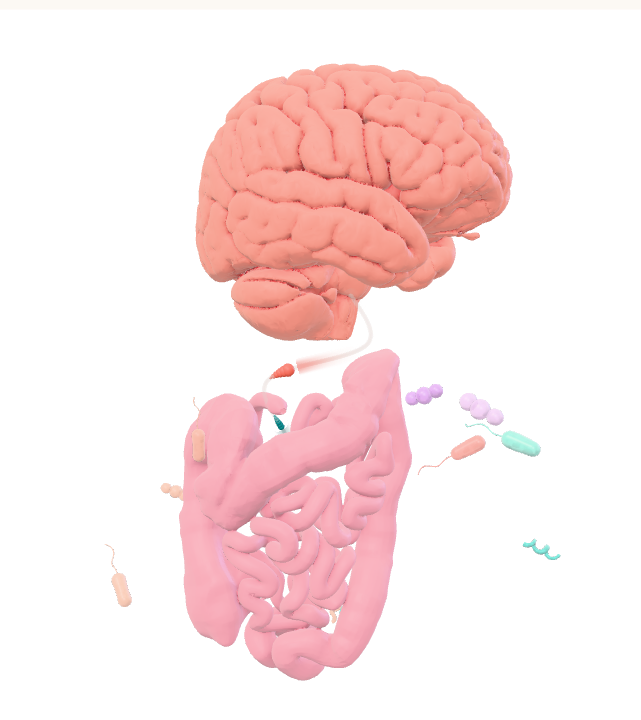
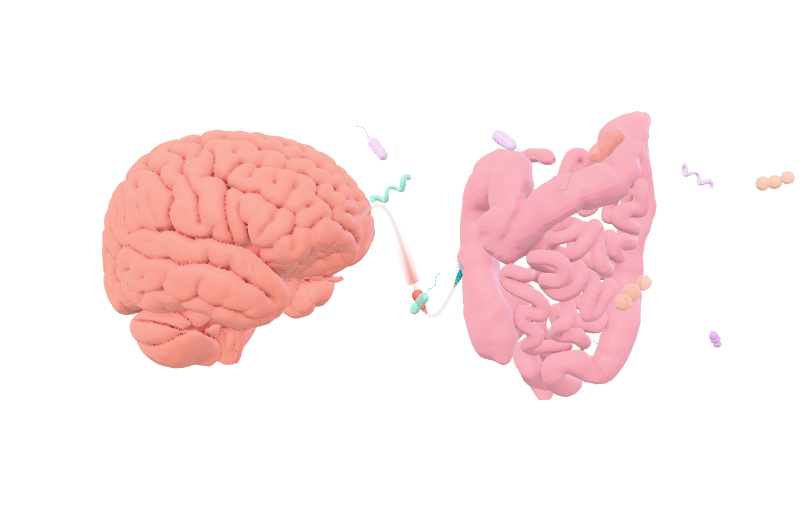
Your gut does more than digest food. It is part of a network of signals that connects with your brain. Researchers call this the gut–brain axis.
Explore the three pathways
Nerves, including the vagus nerve, carry messages between the gut and the brain. Communication travels in both directions.
The gut, its microorganisms and the immune system interact. Scientists are studying how these signals relate to processes in the brain.
Gut microorganisms help break down food and produce molecules called metabolites. Researchers are exploring how these molecules interact with the body and brain.
Understanding a connection is where research begins. NeuraBI is a research project, and nothing on this website is a way to prevent, diagnose or treat a condition.
Explore the scienceTHE SCIENCE, SIMPLY
A growing field of research, with important unanswered questions. These publications are the background to our question. NeuraBI’s own evidence has still to come from its studies.
REVIEW · 2024
A review of communication pathways and preclinical and clinical research. It highlights a field to investigate, not a proven NeuraBI intervention.
Read the publicationOBSERVATIONAL RESEARCH · 2022
Research into associations between the microbiome and multiple sclerosis. An association alone does not establish causation or clinical usefulness.
Read the publicationTHE NEXT CHAPTER STARTS WITH A QUESTION.
A clinician, a researcher, a patient organisation, or simply curious? We’d like to hear from you.
Get in touchNeuraBI is developing AI-powered, personalised microbiome-based approaches for neurological and neuropsychiatric disorders, with an initial focus on multiple sclerosis, Parkinson’s disease and Alzheimer’s disease.
Support the clinical development of our AI-powered platform for microbiome-informed precision medicine.
Scientific collaboration and co-authorship opportunities.